
When Clients Ask AI Before They Ask You
Clients now arrive with answers from a chatbot, and some are keeping routine work in-house. The admin around each matter costs the same as before, so that's where fixed fees get squeezed first.
Cloudfinch Team
Nov 3, 2026
A new kind of first meeting is turning up at UK law and accounting firms. The client has already asked a chatbot. They arrive with a summary, a list of options, and sometimes a decision they've already acted on.
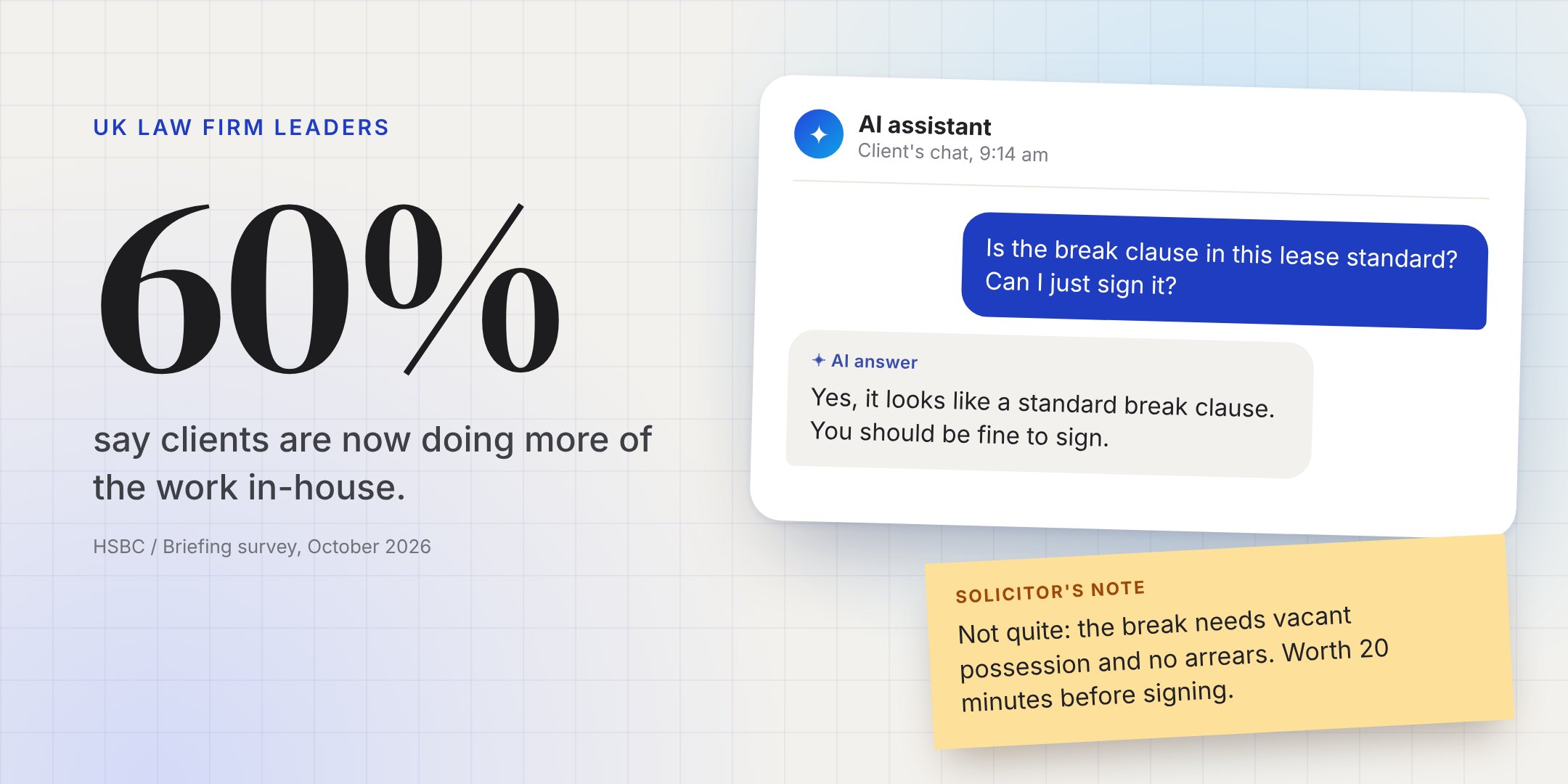
Two recent surveys put numbers on it. In HSBC's annual survey of more than 100 UK law firm leaders, run with Briefing and reported by City AM on October 15, 60% said clients are bringing more work in-house, and 73% called integrating AI a major organizational challenge. On the accounting side, Ravical's survey of 500 UK SMEs found that 70% always or often act on financial, tax or business advice from an AI tool without checking it with their accountant.
In the same City AM piece, the chief executive of one UK firm asked how a firm should charge when a client arrives with an AI-generated strategy and the lawyer's time goes on advising against it. Most small firms will meet some version of that question this year.
What clients are taking back
The work moving in-house is the routine, well-defined part: a first draft of a standard document, a quick read of a contract, a simple tax question. For many small firms that work did two jobs. It earned fees, and it paid for the admin around every matter: intake forms, ID and conflict checks, chasing documents, status emails, file notes.
When the routine work shrinks, the admin stays the same size. A matter with half the billable work still needs the same conflict check, the same engagement letter and the same three emails asking for the missing bank statement. If the client also expects a lower fee because they did some of the work themselves, the margin on a fixed fee gets squeezed from both sides.
Taking the admin out of your own delivery
The admin around a matter is a good fit for AI inside a firm, because it's repetitive and it follows rules your team already has. In a system built around how the firm works, it looks like this:
- Intake. An agent reads what the client sends, checks it against the list for that matter type, and drafts a request for anything missing for your team to approve.
- Chasing. Outstanding items get chased on a schedule, and the fee earner sees one list of what's still missing instead of searching an inbox.
- Comparison against your standards. Documents are checked against the firm's standard positions and the client's earlier matters. Anything that differs goes to a person with the reason attached.
- Status updates. Clients see where their matter is without anyone writing an email.
A person still decides everything that matters. Their time moves from admin to advice.
Take a hypothetical high-street firm reviewing a commercial lease for a small business client. The client sends the draft lease along with a summary they got from a chatbot. The firm's intake agent files both, pulls the client's earlier matters, and lists the clauses that differ from the firm's usual positions. The service charge schedule is missing, so a polite request goes out once the paralegal approves it. The solicitor starts from the list of differences and the client's own summary, and spends their time on the questions the client came for, including where the chatbot's reading of the lease was wrong.
Where to look first
Pick your three most common matter or job types. For each one, estimate:
- How many hours go on the advice or the technical work the client pays for.
- How many go on intake, checks, chasing, status updates and file admin.
- Whether clients have started doing any of the first part themselves.
If the second number is close to the first and the answer to the third is yes, that matter type is where fee pressure will show up first. It's also a good first workflow to automate, because the rules for the admin already exist in your checklists and precedents.
Seeing clients arrive with AI-drafted answers? Book a 30-minute call and we'll go through one matter type with you: where the admin hours go, which parts an agent could handle with your team reviewing, and whether it's the right thing to build first. If it is, you'll get a fixed-fee proposal within a week.