Vibe Coding for SMBs: What Works in 2026 and What Doesn't
MIT Technology Review named generative coding a breakthrough technology of 2026. An honest look at where vibe coding works for SMB software, where it falls apart, and how to tell which is which.
Cloudfinch Team
Mar 4, 2026
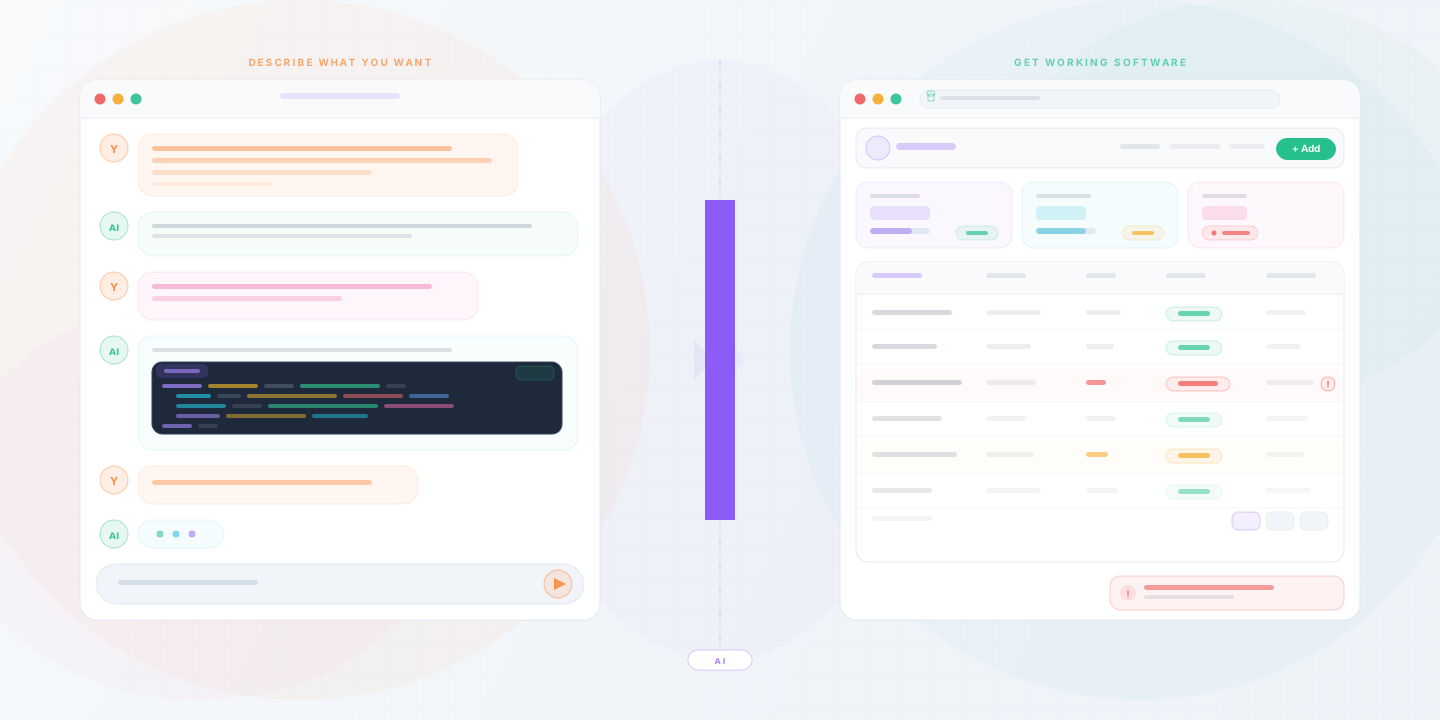
Vibe coding (building software by describing what you want in plain English and letting AI generate the code) has gone from a niche curiosity to a mainstream movement. MIT Technology Review named generative coding one of its 10 Breakthrough Technologies of 2026. Google, Vercel, and dozens of startups are building the tools. And small business owners are asking the obvious question: can I just build my own software now?
Sometimes you can, and sometimes you absolutely shouldn't.
What vibe coding is
The term was coined by Andrej Karpathy in early 2025. Instead of writing code line by line, you describe what you want ("build me an inventory tracker with low-stock alerts") and AI generates working software.
Tools like Cursor, Vercel's v0, Bolt, Lovable, and Replit have made this accessible: you don't need to understand React or databases. You describe your app, iterate through conversation, and ship something functional, often within hours.
Where it works for SMBs
We've seen small businesses use vibe coding to build things they'd never have commissioned from a development agency:
For these use cases, vibe coding changes the economics. A small tool that once meant hiring a developer now costs a monthly subscription.
Where it falls apart
What the hype cycle leaves out:
The 80/20 rule of vibe coding
Vibe coding can get you 80% of a simple application in 20% of the time. The last 20% (security, reliability, integration, edge cases) is where 80% of the real work lives, and it's what separates a demo from production software.
The smart approach for SMBs
The businesses getting the most value from vibe coding use it alongside developers, for the jobs it suits:
What this means for the next 12 months
Vibe coding tools are improving fast, and what fails today might work reliably in six months. The underlying requirement stays the same: business software has to be secure, scalable, and maintainable. AI can generate code faster than ever, but it can't yet supply the judgment that turns code into reliable software.
Use vibe coding where it's strong, and bring in engineers for the software your business depends on.
Want to figure out which is which?
Cloudfinch builds the second kind: custom AI-native software a business runs on, designed, built, and operated by one team. If you could vibe-code it in a weekend, we'll say so.
Book a 30-minute call and we'll talk through what you want to build. If there's a fit, you'll have a fixed-fee proposal within a week.