
AI for Small Businesses: Stop Overthinking It
A practical guide to how small businesses use AI today without big budgets or data science teams, and how to pick your first project.
Cloudfinch Team
Jan 7, 2026
There's a gap between "AI is transforming everything" headlines and what's happening in small businesses. Most SMB owners we talk to fall into one of two camps: they think AI is too complex, too expensive, or overhyped, or they tried a chatbot that didn't work and wrote the whole thing off.
Both reactions are understandable, and both are wrong.
The real reason SMBs are finally paying attention
AI tools crossed a threshold in 2025–2026: they're now useful for businesses without data science teams or enterprise budgets. Three things changed:
What's working
Customer support: Take an online store whose inbox is mostly "where's my order?" A support agent can answer those from order and shipping data within seconds and pass refunds, complaints, and anything unusual to the support team.
Sales forecasting: A B2B services firm can score its pipeline against past wins and losses to predict which deals are likely to close, so the sales team spends its time on those.
Document processing: A logistics company can have AI pull the fields from invoices, BOLs, and customs forms, so staff check extracted data instead of typing it in by hand.
Personalized marketing: A local retail chain can segment customers by what and when they buy, and send each segment offers that fit.
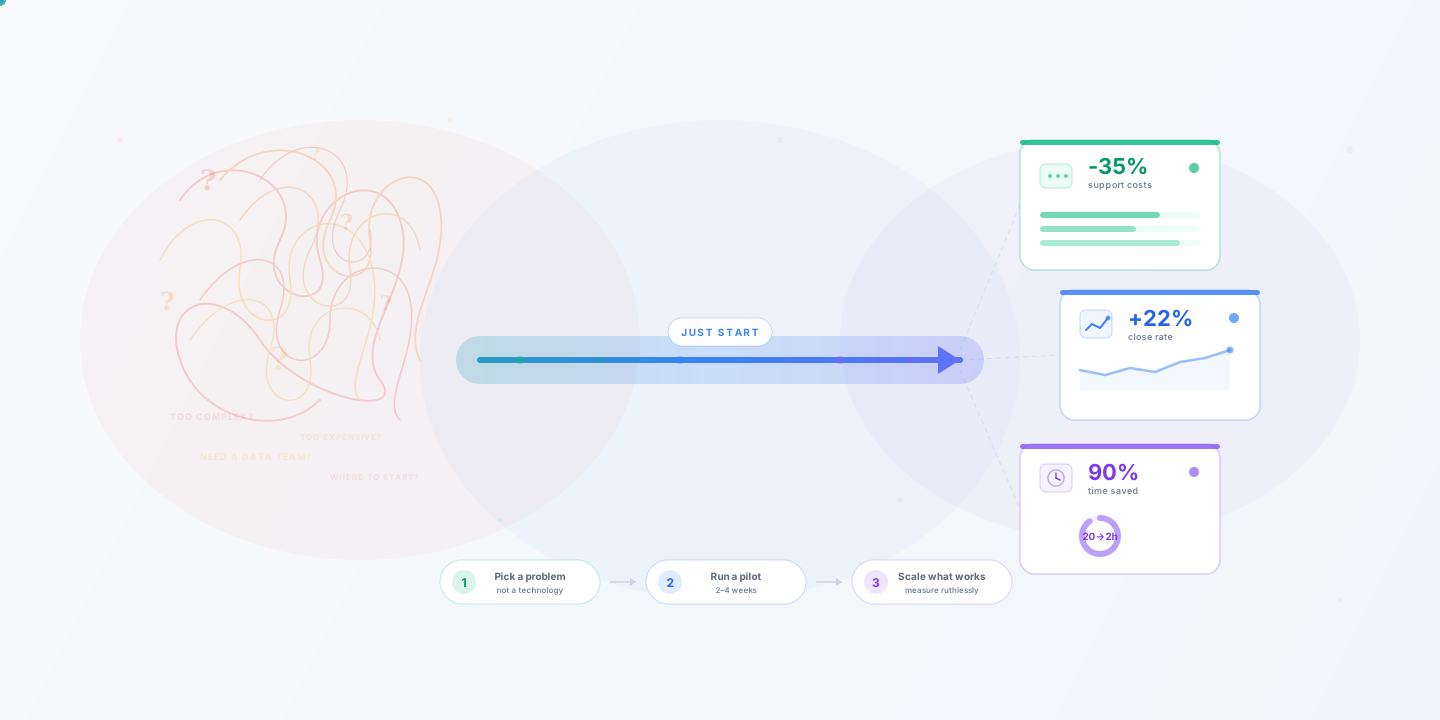
How to start (without analysis paralysis)
The mistake that wastes everyone's time
The biggest mistake we see is starting with the technology instead of the problem. "We should use AI" is not a strategy. "We need to reduce our invoice processing time from 3 days to 3 hours" is. AI might be the solution, or a simpler tool might work as well.
The bigger picture (and why this matters)
Small businesses that use AI well will outperform those that don't, because it lets small teams operate with the efficiency of much larger ones. Early adopters are already gaining ground, so the useful decision now is where to start.
If you want to talk this through...
Cloudfinch builds custom AI-native software for small and mid-sized businesses and operates the agents after launch. We'll tell you plainly where AI will pay off and where it won't.
Book a 30-minute call about your business and the software running it today. If there's a system worth building, you'll get a fixed-fee proposal within a week.