
AI Adoption Roadmap for SMBs | Practical Guide to AI Implementation
A step-by-step roadmap for small and mid-sized businesses to adopt AI practically and profitably—from identifying use cases to scaling across the organisation.
Cloudfinch Team
Dec 17, 2025
Artificial intelligence is no longer a luxury reserved for Fortune 500 companies. In 2025, small and mid-sized businesses (SMBs) have access to the same AI capabilities that were previously out of reach—at a fraction of the cost. But knowing AI is available and knowing how to adopt it are two very different things.
This guide provides a practical, phased roadmap for SMBs looking to implement AI in a way that drives real business value.
AI Adoption Roadmap for SMBs: A Practical Guide to Implementing Artificial Intelligence
Why AI Adoption Matters for Small and Mid-Sized Businesses
1. AI Is Now Affordable for SMBs
Cloud-based AI services from AWS, Google Cloud, and Microsoft Azure have made machine learning accessible on a pay-as-you-go basis. Open-source models and pre-trained AI tools mean you don't need a team of data scientists to get started.
2. Competitive Advantage Is Shrinking
Your competitors—including larger enterprises—are already using AI to automate operations, personalise customer experiences, and make faster decisions. Delaying adoption means falling behind.
3. Faster Return on Investment (ROI)
Unlike large-scale IT transformations, AI pilots can be deployed quickly and deliver measurable ROI within weeks, not years. The key is starting with the right use case.
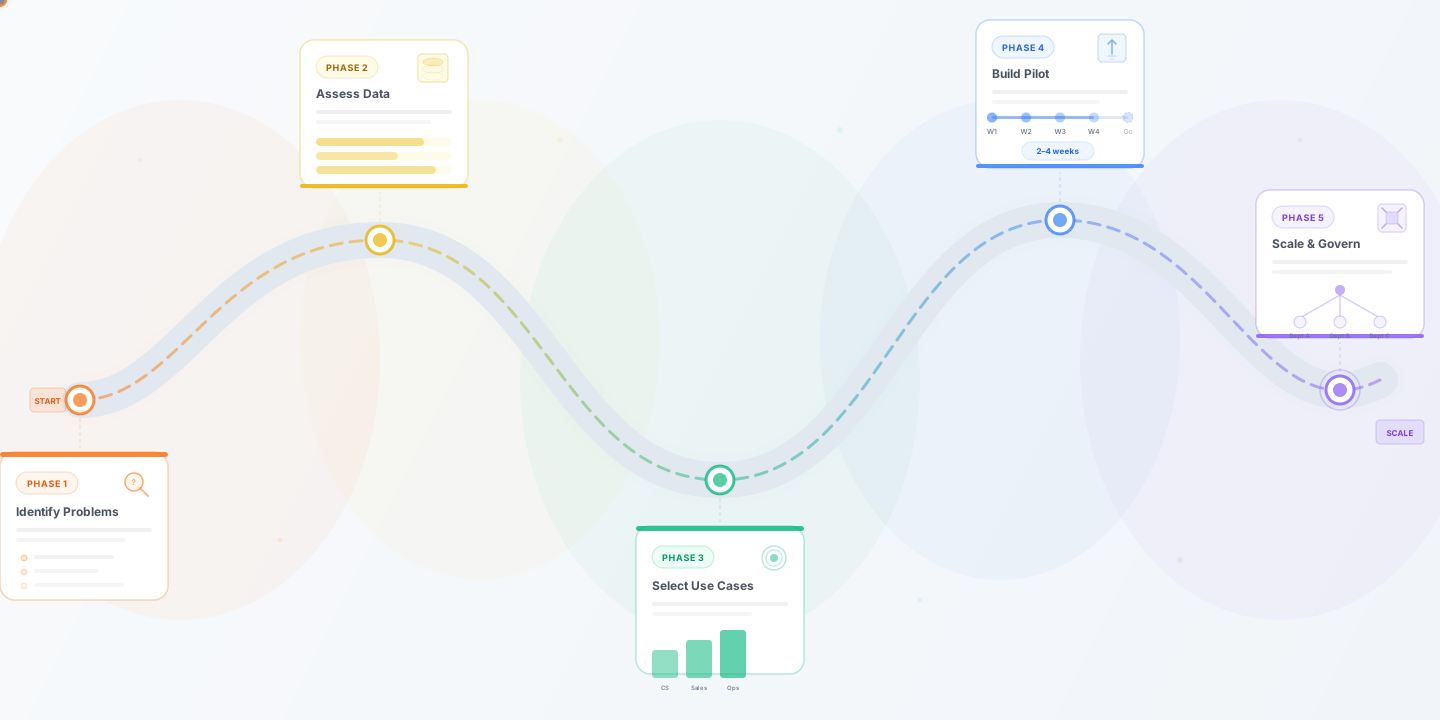
The 5-Phase AI Adoption Roadmap for SMBs
Phase 1: Identify Business Problems (Not "AI First")
The most common mistake is starting with the technology. Instead, start with your business challenges:
Map these problems. Rank them by business impact. The best AI use case is the one that solves your most expensive problem.
Phase 2: Assess Data Readiness for AI
AI runs on data. Before building anything, assess:
You don't need perfect data to start. But you need enough relevant data to train or fine-tune a model for your specific use case.
Phase 3: Select AI Use Cases and Validate ROI
Based on your problem assessment and data readiness, select 1–2 use cases for a pilot. Good first use cases for SMBs include:
For each use case, estimate the ROI: hours saved, error reduction, revenue impact.
Phase 4: Build an AI Pilot or MVP
Build a focused pilot in 2–6 weeks:
Phase 5: Scale, Integrate, and Govern AI Systems
Once you've proven value with a pilot:
Common AI Adoption Mistakes SMBs Should Avoid
How Long Does AI Adoption Take for SMBs?
A realistic timeline:
Most SMBs can have their first AI use case live and delivering value within 2–3 months.
Conclusion: A Practical Path to AI for SMBs
AI adoption doesn't require a massive budget, a data science team, or a multi-year roadmap. It requires clarity about your business problems, a willingness to start small, and a partner who understands both AI and the realities of running an SMB.
Ready to Start Your AI Journey?
At Cloudfinch, we specialise in helping small and mid-sized businesses adopt AI practically and profitably. From identifying the right use cases to building and scaling AI solutions, we're your partner every step of the way.
Schedule a free consultation to discuss your AI adoption roadmap.